


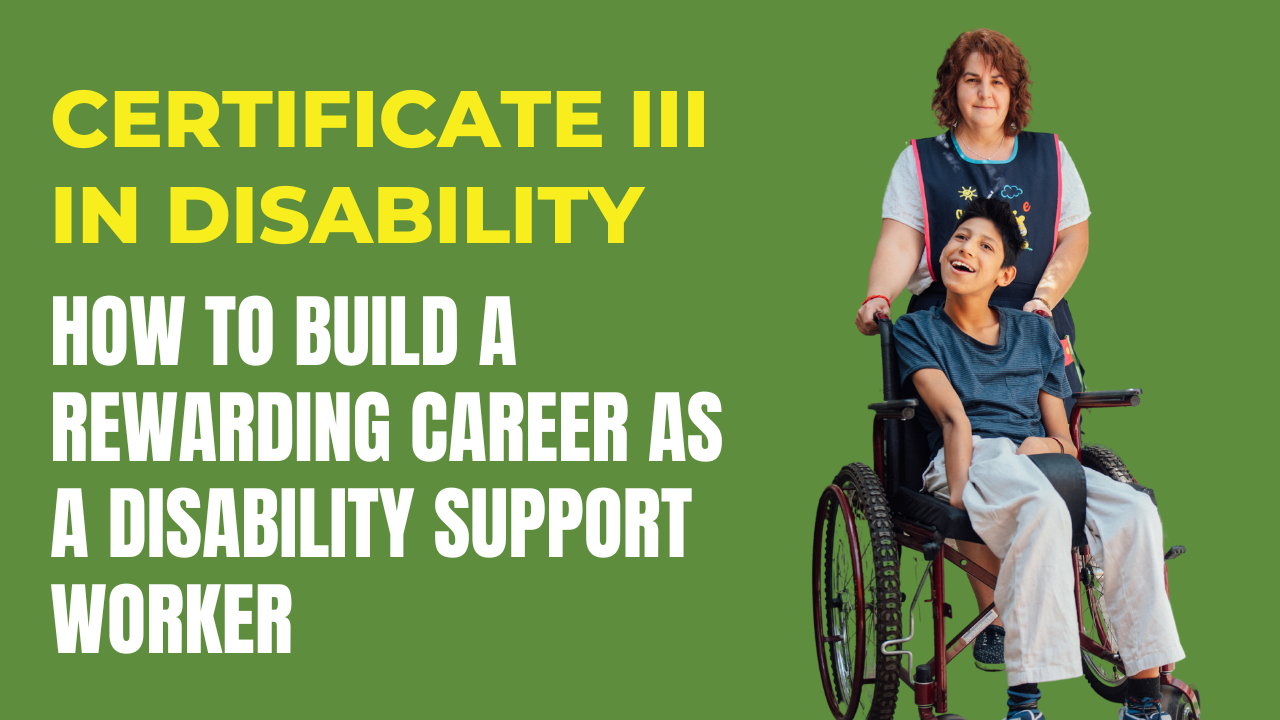
Certificate III in Disability – How to Build a Rewarding Career as a Disability Support Worker
The Growing Need for Disability Support Workers
The need for disability support workers is on the rise in Australia, and it won’t slow down anytime soon. With the National Disability Insurance Scheme (NDIS) expanding and the ageing population that needs more care, the need for trained and compassionate individuals in this profession is growing by the day.
If you’ve ever thought about doing work that actually does make a difference—like actually helping people every day—then Certificate III in Disability could be your thing. It’s practical, no-nonsense, and teaches you the skills to build an honest career in disability care. No jargon, no fluff—just plain old training for real jobs.
What is Certificate III in Disability?
So, what is the course made up of? In short, it’s a beginner training course that prepares you to assist people with disabilities. The goal? To help clients live independently with dignity.
The CHC33021 Certificate III in Individual Support (Disability) instructs basic skills like:
- Helping with daily routines and personal care.
- Assisting emotional and social well-being.
- Communicating with clients, families, and teams effectively.
- Remaining professional and calm in challenging situations.
- Applying individual care plans and legal safety protocols.
You’ll also learn how to foster independence—something that makes a huge impact in people’s lives. One of the trainers I spoke to said, “It’s the small wins that count. Getting someone to make their own cup of tea again? That’s gold.”
There’s theory (yes, the books) and hands-on training—such as actual placements where you’ll shadow and assist workers in the field. And trust me, the practical experience makes all the difference. Being in a classroom and listening about it is one thing. Doing it? That’s where you learn what it’s all about.
Career Pathways & Job Roles
Now that you have the Certificate III in Disability, where can it take you?
Here are the top jobs:
- Disability Support Worker – working directly with clients in support of daily living.
- NDIS Support Coordinator – assisting clients with managing their NDIS plan and accessing services.
- Personal Care Assistant – care in settings such as aged care or supported living.
And where might you work? That is the best thing. You have options:
- NDIS providers (private or government-funded).
- Residential care homes or aged care facilities.
- Community outreach programmes.
- Even home-based care, if you prefer to work more independently.
And here’s something not everyone will say—it’s not a one-tracked career. Some staff then specialize in mental health or become case managers. Others move into leadership or even policy work.
Why Study Disability Care?
There are heaps of reasons to enter this career—but let’s break it down.
- High Demand = Job Security
The disability sector is one of Australia’s fastest-growing industries. It’s expected to grow by 25% in the next five years, according to Jobs and Skills Australia (Jobs and Skills Australia, ‘Care Workforce Data,’ 2023, jobsandskills.gov.au). That translates into more work, more flexibility, and more ways to grow. - Flexible Work Environments
Not looking for a 9-to-5 office career? That’s okay. Disability support is different. You might work in someone’s home, in a care centre, or while out and about in the community. You might work full-time, part-time, weekends, or evenings—it can fit around your life. - Real Impact, Every Day
Look, some work is just work. But this? It makes a difference. You’re not simply reporting in to tick boxes. You’re helping someone live a better life. That’s a pretty great reason to put your feet on the floor in the morning.
Course Details & How to Enrol
Thinking of signing up? Here’s what you need to know.
Entry Requirements:
You’ll be required to have completed Year 10 or the equivalent. It’s possible some training providers might invite you along to an information session or just take a quick literacy and numeracy test—just to confirm the course for you.
Fees:
Prices range from $1,500 to $4,000, depending on where and how you study. Don’t stress—there’s funding available, including government-subsidised positions and payment plans. Have a look at something like Smart and Skilled (NSW) or Skills First (VIC) for help.
Study Options:
- Online: Suitable if you work or have family to balance.
- In-person: Ideal if you learn face-to-face.
- Blended: Both mixed together—best of both worlds.
Duration:
Most students finish in 6 to 12 months full-time, or up to 18 months part-time. That’s not long at all for a qualification that leads to a career.
Join the Growing Disability Support Workforce – Apply Now!
If you’ve been thinking about getting into care work, there’s never been a better time. The Certificate III in Disability isn’t just a stepping stone—it’s a solid start to a meaningful, people-focused career.
Whether you’re fresh out of school or looking for a change from your current job, this course offers skills that employers need and clients appreciate. Plus, you’ll be part of a community that makes a genuine impact.
Might be time to ask yourself: ready to do something that really matters?