


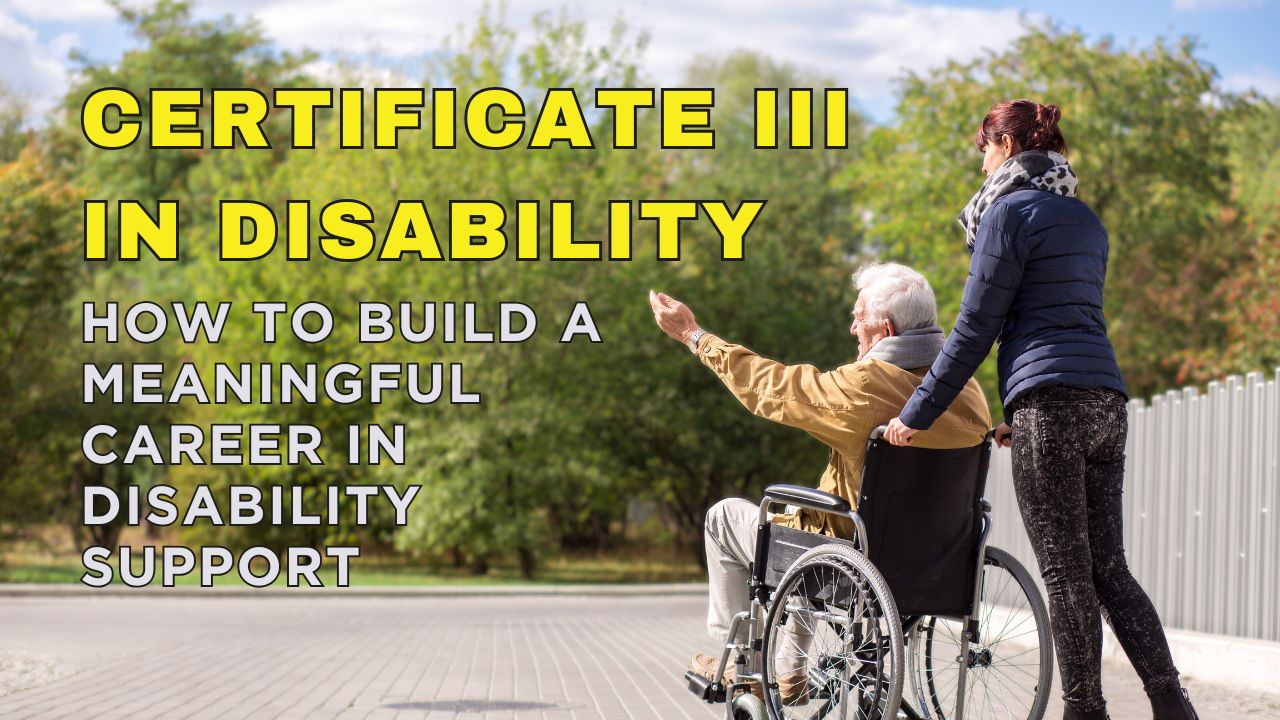
Certificate III in Disability – How to Build a Meaningful Career in Disability Support
The demand for disability support workers is rising across Australia, and it’s not slowing down any time soon. With the National Disability Insurance Scheme (NDIS) expanding and an ageing population needing more care, there’s a growing need for skilled, compassionate people in this space.
If you’ve ever thought about doing work that actually matters—like genuinely helping people day-to-day—then the CHC33021 Certificate III in Disability could be the right move. It’s practical, hands-on, and gives you the tools to build a real career in disability care. No fluff, no corporate speak—just real training for real work.
What is the Certificate III in Disability?
So, what’s in the course? Put simply, it’s an entry-level training programme that prepares you to support people living with disabilities. The goal? Help clients lead independent, dignified lives.
The Certificate III in Disability covers core skills like:
- Assisting with personal care and daily routines.
- Supporting emotional and social wellbeing.
- Communicating effectively with clients, families, and teams.
- Handling challenging situations calmly and professionally.
- Following individual care plans and legal safety protocols.
You’ll also learn how to promote independence—something that makes a massive difference in people’s lives. One trainer I spoke to said, “It’s the small wins that count. Helping someone make a cup of tea on their own again? That’s gold.”
There’s a mix of theory (yes, the books) and practical training—like real placements where you’ll shadow and support workers on the job. And believe me, the hands-on part makes all the difference. Sitting in a classroom and hearing about it is one thing. Doing it? That’s where you learn what it’s really about.
Career Pathways & Job Roles
Once you’ve completed the Certificate III in Disability, where can it take you?
Here are the most common roles:
- Disability Support Worker – working one-on-one with clients to support daily living.
- NDIS Support Coordinator – helping clients navigate their NDIS plans and find services.
- Personal Care Assistant – providing care in settings like aged care or supported accommodation.
As for where you might work? That’s the good bit. You’ve got options:
- NDIS providers (private or government-funded).
- Residential care homes or aged care facilities.
- Community outreach programmes.
- Even in-home support, if you prefer working more independently.
And here’s something not everyone tells you—it’s not a one-track career. Some workers go on to specialise in mental health or become case managers. Others move into leadership or even policy work.
Why Study Disability Care?
There are heaps of reasons to jump into this field—but let’s keep it simple.
- High Demand = Job Security
The disability sector is one of the fastest-growing industries in Australia. According to Jobs and Skills Australia, it’s expected to grow by 25% over the next five years (Jobs and Skills Australia, ‘Care Workforce Data,’ 2023, jobsandskills.gov.au). That means more roles, more flexibility, and more chances to grow. - Flexible Work Environments
Not keen on a 9-to-5 desk job? Good. Disability support doesn’t look like that. You might work in a client’s home, a care centre, or out and about in the community. You could work full-time, part-time, weekends, or evenings—it fits around your life. - Real Impact, Every Day
Look, some jobs are just jobs. But this? It matters. You’re not just showing up to tick boxes. You’re helping someone live better. That’s a pretty solid reason to get out of bed in the morning.
Course Details & How to Enrol
Thinking of signing up? Here’s what you need to know.
Entry Requirements:
You’ll need to have completed Year 10 or equivalent. Some training providers may ask you to attend an info session or take a quick literacy and numeracy test—just to make sure the course is right for you.
Fees:
Tuition can range from $1,500 to $4,000, depending on where and how you study. But don’t panic—there are funding options available, including government-subsidised spots and payment plans. Look into things like Smart and Skilled (NSW) or Skills First (VIC) for help.
Study Options:
- Online: Great if you’re balancing work or family.
- In-person: Ideal if you learn better face-to-face.
- Blended: A mix of both—best of both worlds.
Duration:
Most students finish in 6 to 12 months full-time, or up to 18 months part-time. That’s not long at all for a qualification that leads to a career.
Join the Growing Disability Support Workforce – Apply Now!
If you’ve been thinking about getting into care work, there’s never been a better time. The Certificate III in Disability isn’t just a stepping stone—it’s a solid start to a meaningful, people-focused career.
Whether you’re fresh out of school or looking for a change from your current job, this course offers skills that employers need and clients appreciate. Plus, you’ll be part of a community that makes a genuine impact.
Might be time to ask yourself: ready to do something that really matters?